The Culinary Magic of Garlic Confit: From Pungent to Palatable
Imagine garlic transformed: its sharp, assertive bite mellowed into a velvety, spreadable delight with a subtly sweet and savory depth. This isn't magic, it's the art of garlic confit – a simple yet profoundly rewarding culinary technique that elevates humble garlic cloves into a gourmet ingredient. If you've ever wondered how to make garlic confit sweet, buttery, and versatile, you're in for a treat. This guide will walk you through the process, turning everyday garlic into a kitchen staple you won't want to live without.
Understanding the Confit Technique
The term "confit" originates from France, historically referring to a method of preserving food by slowly cooking it in its own fat. While traditionally applied to meats like duck legs (duck confit is a classic), the technique translates beautifully to vegetables. For garlic, this means a gentle, low-and-slow simmer in olive oil. This process is transformative: the harsh, sulfurous compounds responsible for garlic's signature pungency are broken down, leaving behind a complex, nutty sweetness. The cloves become incredibly tender, almost buttery, and perfectly spreadable.
Unlike roasting, which can sometimes caramelize and brown the garlic, confit aims for a slow, even cook that softens the cloves without allowing them to take on too much color. This delicate treatment is what coaxes out its inherent sweetness and mellows its intensity, resulting in a flavor profile far more nuanced than raw or even deeply roasted garlic. The aroma alone as it cooks is enough to make your kitchen smell like a five-star restaurant!
Gathering Your Essentials: Ingredients for Superb Garlic Confit
One of the beauties of garlic confit is its simplicity, often requiring just two core ingredients. However, a few optional additions can elevate its flavor profile significantly.
The Star: Garlic
- Quantity: For a decent batch that lasts a couple of weeks, aim for about 3 cups of peeled garlic cloves, which typically comes from 6 to 8 full heads of garlic. Don't be shy; you'll use it!
- Quality: Fresh, firm garlic heads will yield the best flavor. While buying pre-peeled garlic cloves can save time, they sometimes lack the intense flavor of freshly peeled garlic. If using pre-peeled, ensure they are free from additives or preservatives. Ethically sourced garlic, often from within your own country like the United States, is also a consideration due to labor practices in some regions.
- Peeling Tip: To make peeling large quantities easier, gently smash each clove with the flat side of a chef's knife. The skin will loosen and often slip right off. You can also blanch them briefly in hot water then shock in ice water.
The Golden Medium: Extra Virgin Olive Oil
- Why EVOO? This isn't just a cooking medium; it's a critical flavor conduit. As the garlic and herbs cook, their essences infuse into the olive oil, turning it into a rich, aromatic elixir. Use good quality extra-virgin olive oil for the best results, as its flavor will become a prominent part of the finished product.
- Quantity: You'll need enough olive oil to completely submerge all the garlic cloves in your cooking vessel. This is crucial for proper confit and safe storage.
Aromatic Boosters: Herbs & Spices (Optional, but Recommended)
- Fresh Herbs: Fresh rosemary, thyme, and bay leaves are highly recommended over dried. They contribute an earthy, herbaceous complexity that beautifully complements the garlic. Just a few sprigs and a leaf or two will do.
- Crushed Red Pepper Flakes: For those who appreciate a subtle kick, a pinch of red pepper flakes adds a wonderful warmth. If heat isn't your preference, feel free to omit it.
The Subtle Enhancer: Salt (Optional)
- A small pinch of salt, while optional, can enhance and brighten the overall flavor of the confit, balancing the sweetness and richness.
How to Make Garlic Confit: A Step-by-Step Guide for Stovetop & Oven
Making garlic confit is a surprisingly hands-off process, allowing the gentle heat to work its magic. Here’s how to make garlic confit using either your stovetop or oven.
Preparation
- Peel the Garlic: Carefully peel all your garlic cloves. Rinse them gently under cold water and pat them thoroughly dry with a paper towel. Any residual water can cause the oil to splatter.
- Arrange in Cooking Vessel: Place the peeled garlic cloves into a small, heavy-bottomed saucepan (for stovetop) or an oven-safe dish (for oven method). Ensure the dish is just large enough to hold the garlic in a single layer or a shallow layer, but not too wide, to minimize the amount of oil needed.
- Add Herbs & Spices: If using, tuck in the fresh rosemary and thyme sprigs, bay leaves, and red pepper flakes among the garlic cloves. Add a pinch of salt if desired.
- Submerge in Oil: Pour extra virgin olive oil over the garlic and herbs, ensuring all the cloves are completely submerged. This is critical for even cooking and subsequent safe storage.
Stovetop Method
- Gentle Heat: Place the saucepan over the lowest possible heat setting on your stovetop. The goal is a very gentle simmer, not a fry. You should see tiny, lazy bubbles around the garlic cloves, but no active bubbling or browning.
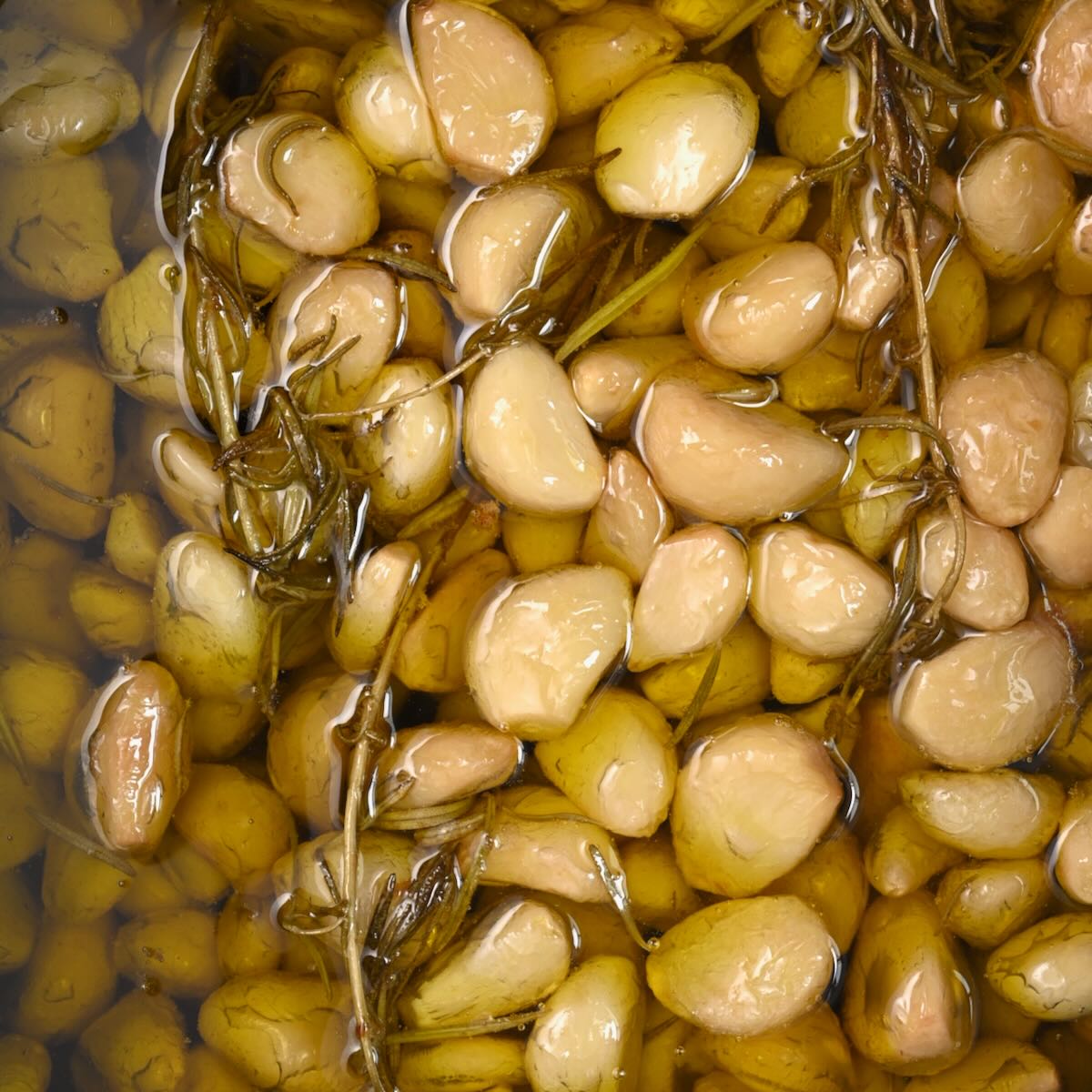
- Slow Cook: Cook for 45 minutes to 1.5 hours, or until the garlic cloves are incredibly tender and easily pierced with a fork. They should look plump and slightly translucent, with a pale golden hue, but not browned.
- Monitor: Keep a close eye on the heat; if the oil starts to bubble vigorously, reduce the heat immediately.
Oven Method
- Preheat Oven: Preheat your oven to a low temperature, typically between 250-300°F (120-150°C). Lower is often better for a slower, more controlled confit.
- Bake Gently: Place the oven-safe dish with the submerged garlic in the preheated oven.
- Slow Cook: Bake for 45 minutes to 1.5 hours, or until the garlic cloves are very soft and tender when pressed or pierced. As with the stovetop method, they should be pale golden and not browned. The beauty of the oven method is that it often provides more consistent, even heat.
Testing for Doneness
Regardless of the method, the garlic is ready when it feels incredibly soft and yields to gentle pressure, almost melting. It should still hold its shape but be easily mashed. Once done, remove from heat and let the confit cool completely in the oil before transferring to storage.
Maximizing Your Confit: Storage, Safety, and Culinary Uses
Crucial Storage & Safety Guidelines
Garlic confit, while delicious, requires careful storage due to the potential risk of botulism, a serious foodborne illness. Garlic is a low-acid food, and when stored in oil in an anaerobic (oxygen-free) environment at room temperature, it creates ideal conditions for the growth of Clostridium botulinum bacteria. This is why proper storage is not just a suggestion, but a critical safety measure.
- Refrigeration is Essential: Always store your garlic confit (cloves and infused oil) in a clean, airtight container in the refrigerator immediately after it has cooled.
- Complete Submersion: Ensure the garlic cloves remain completely submerged in the infused olive oil. This acts as a barrier and helps maintain quality.
- Shelf Life: Homemade garlic confit stored correctly in the refrigerator is generally safe for up to two weeks. Some sources say up to three weeks, but two weeks is a safer bet. Beyond this, it's best to discard it.
- Freezing: For longer storage, garlic confit can be frozen. Place the cloves and oil in ice cube trays, freeze solid, then transfer the cubes to a freezer-safe bag for up to 3-6 months.
- Never store at room temperature.
Creative Ways to Enjoy Your Garlic Confit
Once you've mastered how to make garlic confit, the culinary possibilities are endless! Its sweet, buttery profile adds an incredible depth of flavor to countless dishes.
- Spread & Dip: Mash the tender cloves and spread them onto crusty bread, toast, or crackers. Use the infused oil for dipping bread.
- Elevate Mains: Stir whole or mashed confit garlic into mashed potatoes, polenta, risottos, or pasta dishes for an instant flavor boost.
- Savory Soups & Stews: Add a spoonful to your favorite soups, stews, or chili during the last few minutes of cooking.
- Roasted Vegetables: Toss with roasted vegetables like broccoli, asparagus, or potatoes.
- Dressings & Marinades: The infused olive oil is fantastic in salad dressings, marinades for meats, or drizzled over grilled fish or vegetables.
- Compound Butter: Mash confit garlic into softened butter with fresh herbs for a flavorful compound butter.
- Sauces & Dips: Blend into hummus, pesto, aioli, or other creamy sauces.
- Pizza & Flatbreads: Scatter whole or sliced cloves over homemade pizza or flatbreads before baking.
Conclusion: Embrace the Sweet Side of Garlic
From its pungent beginnings to a tender, sweet, and unbelievably versatile ingredient, garlic confit is a testament to the power of slow cooking. It's a simple process that yields extraordinary results, enriching countless dishes with its unique depth of flavor. By understanding how to make garlic confit correctly and, crucially, how to store it safely, you can keep this golden delight on hand for an effortless way to elevate your everyday cooking. So, gather your garlic, embrace the low heat, and prepare to embark on a flavorful journey that will transform your kitchen.
